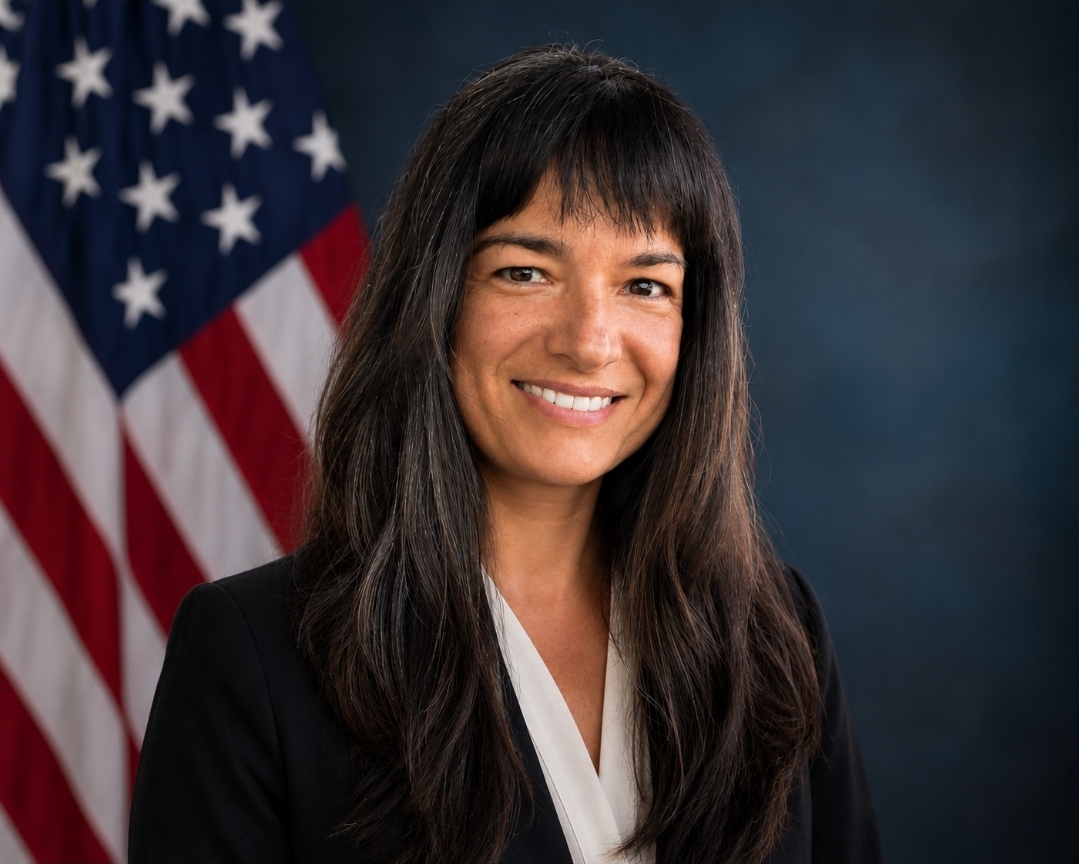
Julia McClenon is an interdisciplinary scholar, trained as a cultural and behavioral ethnographer (anthropologist) and sociolinguist, with a focus on Asia, China, and specific diaspora in Asia and America. She is an interagency civil servant with experience in both the Department of Defense and the Department of State. She was previously commissioned as a Foreign Service Officer of the U.S. diplomatic corps. For State Department, she was Chair of the Consul General's Civil Society Working Group on Religion in China.
At NPS, she currently works on security cooperation initiatives, TTX and computer-mediated wargaming, project management, and Chinese information operations as part of the Global ECCO team.
In 2010, as part of a team, she earned commendation from the Assistant Secretary of Defense for Special Operations and Low-Intensity Conflict. In 2023, she was an Irregular Warfare Initiative Fellow and podcast host. She earned her M.A. in Religious Studies from the University of California, Santa Barbara on research and teaching fellowships and as a member of the cognitive science REMLab group, where she conducted ethnographic and sociolinguistic research on Chinese worldviews, calendrical systems, and CCP cultural narratives. Julia can neither confirm nor deny that she is also a pseudonymous food writer.
As a teenager, I was drawn to NPS as the producer of the highest number of our astronauts --- like many young people, I thought I might want to be an astronaut some day. But after an exciting interdisciplinary undergraduate program in China and Japan, I was fortunate early in my federal career to work under first-generation Defense Analysis Department (DA) giants, who planted the seed to show me that DA, its SOF sponsors, and its students value the critical work of cultural anthropologists like me, who are most comfortable in the field, alongside the populations we are seeking to understand. It was a revelatory moment to come under the mentorship of DA faculty at that time, where I found there could be a home for someone who values both the peace-making possibilities of being multi-culturally fluent, while also being concerned with a responsibility for national defense. DA's mature graduate education community is capable of investigating complex human issues beyond black or white thinking.
Returning to DA as a Research Associate ten years later after all the things I am fortunate to have survived was a complete "pinch me, I am dreaming!" moment. I am extremely fortunate to work with both the colleagues and students that I do, who humble me every day and support and challenge me to grow and be better in service to others who dedicate their lives to our nation's defense.
Being able to rapidly switch between communication types (not just languages) is invaluable for interpersonal and professional relationships. Knowing whether your counterpart is interested in and able to communicate directly versus indirectly, or vice versa, can quickly transform a work, teaching, or advising relationship from one that is stuck to one that is productive, and that simply feels better for both parties.
Practicing rapidly people-reading under time constraints with high stakes helps me be at the top of my game while delivering briefings and lectures: I can quickly assess what is landing or not, with whom, and how to adapt my style or content to optimize contextual efficacy.
NPS is a rapidly expanding powerhouse in the defense wargaming community. Our superpower is hands-down the interdisciplinary and joint force nature of our faculty and students. I and my wargaming colleagues at NPS including the Global ECCO team, the CORE Lab, the Wargaming Certificate instructors, and the Wargaming Center are capable of, interested in, and adept at combining the science, technology, and engineering capabilities at our fingertips at NPS, with human dimensions of working, understanding and analyzing (cultural, social, linguistic, and pedagogical). I think we should expand efforts to communicate these unique in-house interdisciplinary capabilities and resources to the broader defense enterprise so they know we are already in their toolkit.
What I hope to be the most outstanding feature of what we are creating is its deployability to our allies and partners by remaining at unclassified levels of development. The United States is leading the change to increase burden sharing with our allies and partners; this project shows those critical partners that this does not mean they are now completely on their own --- instead, our tool will actively support and expand our partners' knowledge, understanding, and ability to identify and respond to PRC-CCP malign activities empowered by their own sovereignty and national resilience.
For our own service members, creating a CUI tool allows them to gain fluency in PRC-CCP-grounded maneuvering across the gray zone in a way that they can openly do the critical work of sharing what they're learning with others in their circle, both at work and at home. Calling out the CCP's blatantly deceptive tactics so that more people are aware of the destabilizing effects of its actions is critical to defending our nation from the CCP's highly sophisticated and dangerous-to-democracy irregular warfare operations.
This project simply wouldn’t be possible without the resource support from Digital Trident II. There were no other calls for research proposals even remotely covering this topic. Digital Trident II’s innovation-centered support makes it an outstanding opportunity for boundary pushers like those on my team: Seth Gray, Dr. Kathleen Bailey, Chad Machiela, MAJ H.D. Woodruff, and with Tim Cahoe in consultation. We are a highly interdisciplinary team and it feels like Digital Trident II could see that in us, and why it is a strength, and we are so lucky for the support. We will be using the funding to cover labor, travel to the Philippines and to US stakeholders, as well as for NVIDIA equipment. We are so excited that the program also includes consultation or mentorship with appropriate industry contacts and technical SME’s.