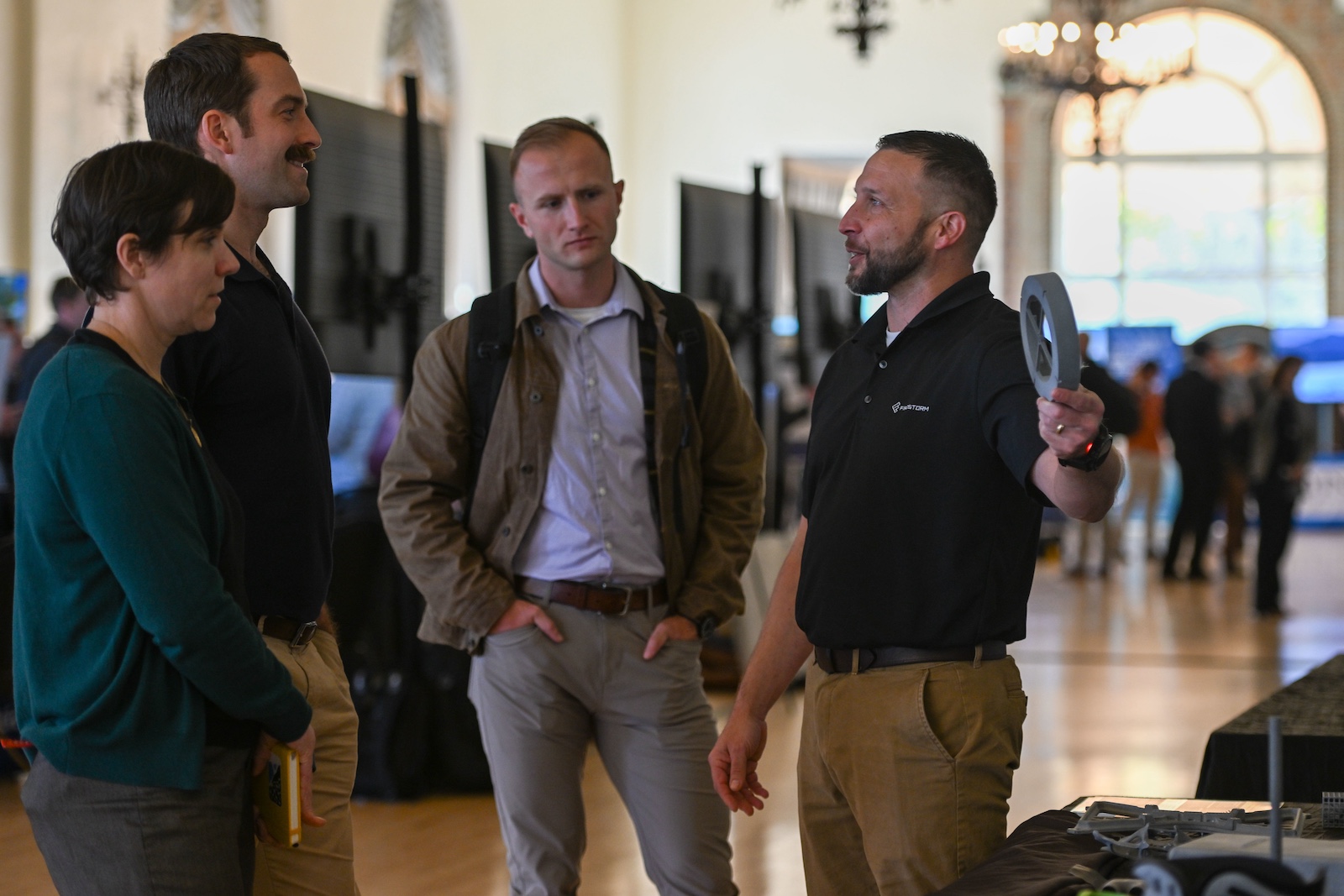
More than 300 professionals from across industry, venture capital, government and military agencies, and the Naval Postgraduate School gathered for Converge @ NPS in Monterey, California, January 28-30, to connect tech with operational needs and initiate collaborations that can accelerate relevant capability development.
In its fourth iteration, Converge @ NPS enables attendees to learn about NPS collaborative projects, explore partnerships for testing, prototyping and deploying solutions at scale, showcase technology and collaboration opportunities, and grow the ecosystem of national security innovation through breakout groups, workshops, and panel discussions.
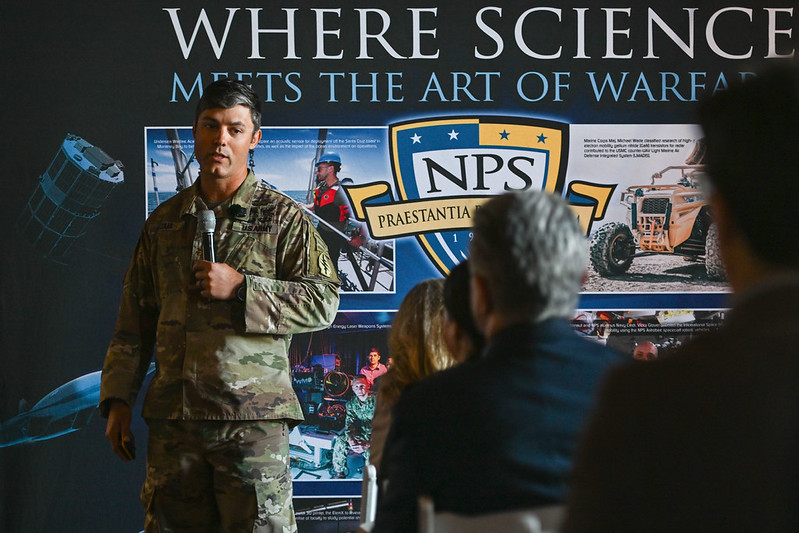
Converge kicked off with an NPS Project Pitch session, where six NPS faculty and students pitched collaborative projects to industry and military/government agencies for partnership and sponsorship spanning research, education, experimentation, data sharing and more. Ranging from energy and quantum sensing to AI, autonomy, and wargaming, the pitches focused on moving from prototype to capabilities that can be tested, integrated and used.
NPS research and education is focused on practical work using data, commercial tools, and applied experimentation to improve efficiency, move faster, and support better decision-making. The six projects pitched in the live session at Converge represent only a handful of the projects and collaboration opportunities at NPS.
Two panel discussions during the event provided insight on key challenges facing the joint force and our allies, generating discussion amongst attendees of who is doing what and what needs to be done better and faster.
Panelists from NPS, webAI, and the Marine Corps Software Factory joined Capt. Mike Owen, NPS Information Warfare Chair, for the Battlefield Information Dominance panel. They discussed the reality of cognitive overload, fragmented systems, and the challenge of turning growing volumes of information into timely decisions. The conversation brought into focus what needs to happen next including earlier collaboration between operators, researchers and industry, tools leaders can trust, and sustained investment in uniformed human capital.
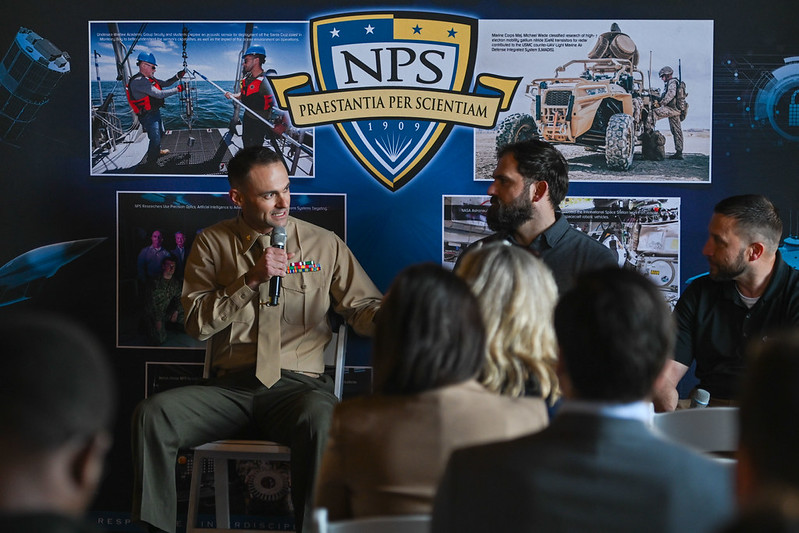
The Moving Faster: Tech Adoption panel, moderated by Kaitlin Penry, NPS Director of Emerging Technology & Innovation, pulled in perspectives from Anduril, Firestorm Labs and HQMC Combat Development & Integration (CD&I). The discussion focused on moving faster without sacrificing operational relevance, emphasizing co-development, clear guardrails and higher quality feedback loops between government and industry. It was clear that speed comes from better clarity, trust and bringing industry into the needs process earlier.
On day two of Converge, more than 30 industry partners showcased their capabilities and technologies on the exhibit hall floor in the Barbara McNitt Ballroom at NPS. Industry and government agencies such as Anduril, RTX, Lockheed Martin, Qualcomm, MITRE, Sterling, Apeiron Labs, HII, ServiceNow, Marine Corps Software Factory, Red Cell Partners, Shield Capital, Google, Paratus AI, webAI, Firestorm Labs, and many more showcased their technologies and capabilities to Converge attendees while exploring opportunities for collaborative research and experimentation with the intent to develop and rapidly scale solutions.
“We’ve had strong conversations with industry and with NPS students about potential applications that can grow out of thesis work, how students can help strengthen our algorithms, and how we can work more closely with industry moving forward,” said Maj. Matt Robinson, Deputy Director, Marine Corps Software Factory.
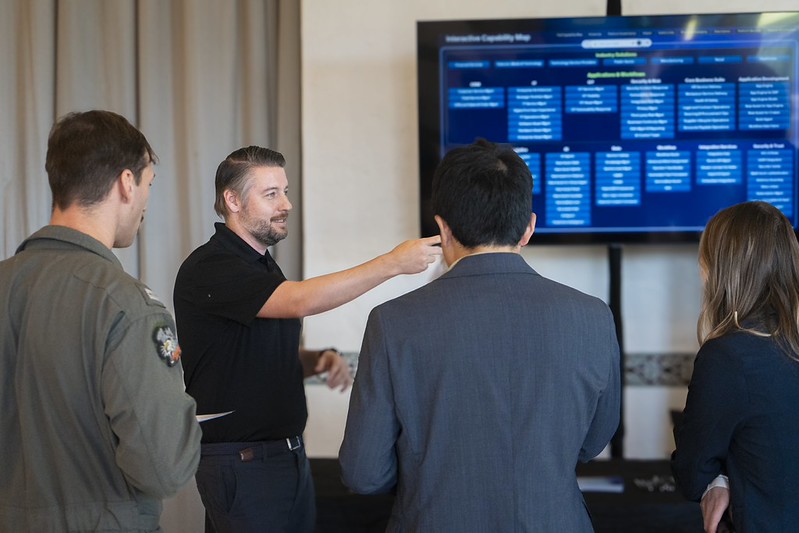
During the operational challenge breakout groups on Jan. 29, groups of 10 with mixed expertise, organizations, and backgrounds focused on addressing challenges across six critical technology areas including contested logistics, quantum sensing, AI for maritime operations, swarm autonomy, and underwater communications.
“The benefit of working with the end user is understanding what’s real now and how we can best support the warfighter at the end of the day,” said Christopher Knapp, Head of Business Development, Gambit AI.
Friday’s workshops centered on partner technologies, how they are being used at NPS, and how they can be applied to operational problem sets. Led by industry and government organizations, the sessions gave faculty and students an opportunity to engage directly with these platforms and discuss how they can be incorporated into ongoing research, education and innovation efforts.
Converge @ NPS provides a setting for industry, government and warfighters to share insights about the operational challenges the Joint Force faces, learn more about what industry is developing to address those challenges, and commit to collaborative actions that will accelerate technology adoption.
NPS and the NPS Foundation cohost Converge every six months under the auspices of a Partner Intermediary Agreement, enabling direct support for partner and tech scouting, tech transfer and licensing, and enhanced corporate engagement.
Converge @ NPS will return July 22-24, 2026, in conjunction with the International Alumni Symposium, both hosted in Monterey, California. Registration will open in June. Stay up to date on events and other impactful NPS work by signing up for the NPS Foundation mailing list.
Learn more at npsfoundation.org/convergenps. View the January 2026 event photos here.
Continue the conversation with Athena, a defense collaborative research platform. Request an Account: www.athena4partners.org/request-account.


