How do you move from idea to capability fast enough to matter? The question surfaced everywhere at Sea-Air-Space this year in hallway conversations, on the exhibition floor, and from the front of the room during keynotes and panel discussions. It is the defining tension of this moment in national security: technology is accelerating, timelines are compressing, and the traditional systems for developing and fielding capability were not built for this pace.
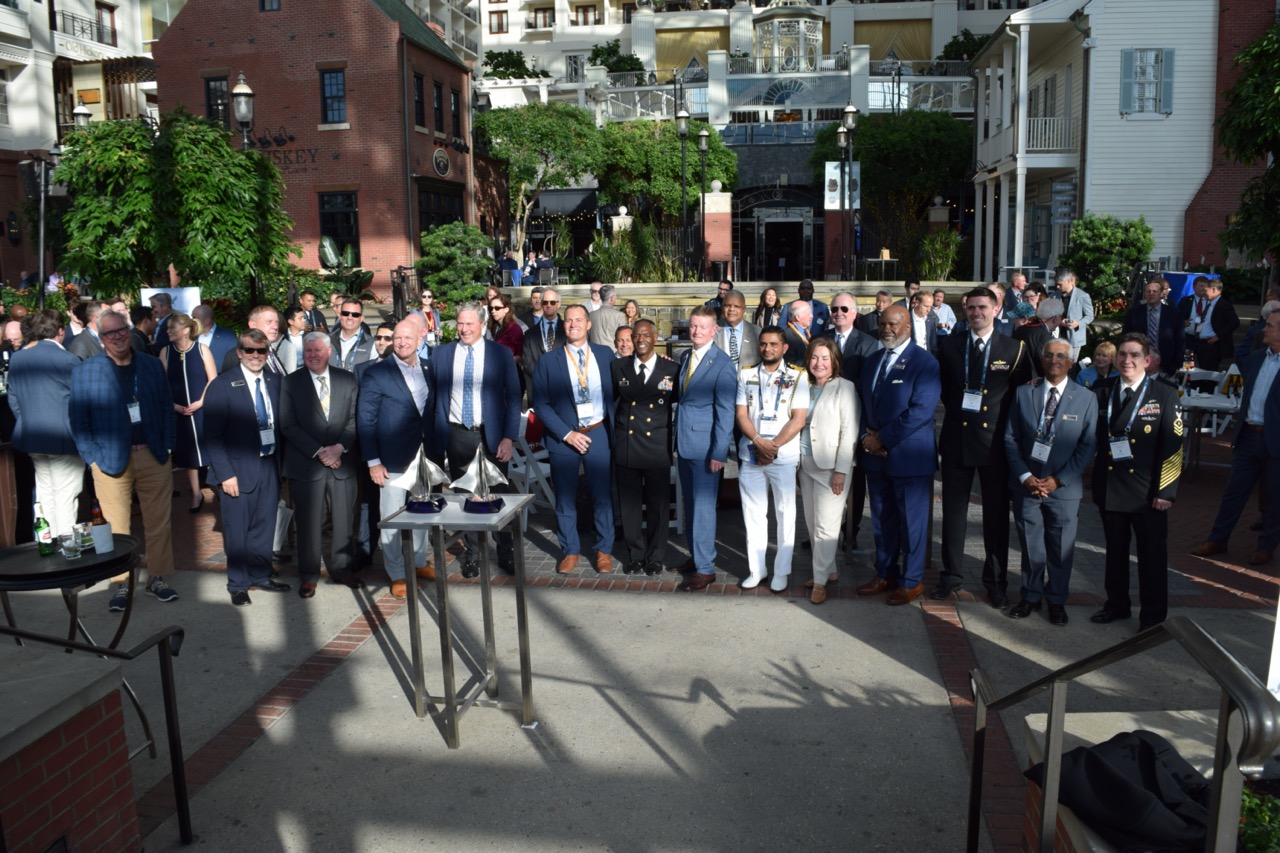
The week began Monday evening with a joint reception hosted by the Naval Postgraduate School Foundation and the U.S. Naval War College Foundation. The room brought graduates, faculty, and senior leadership from both institutions together with government and industry partners.
The evening included remarks from DARPA Director Stephen Winchell, an NPS alumnus. Winchell took over as DARPA director in May 2025. An NPS alumnus, his career spans submarine service, Project Maven, and leadership roles in artificial intelligence and autonomous systems within the Department of Defense, including the Strategic Capabilities Office.
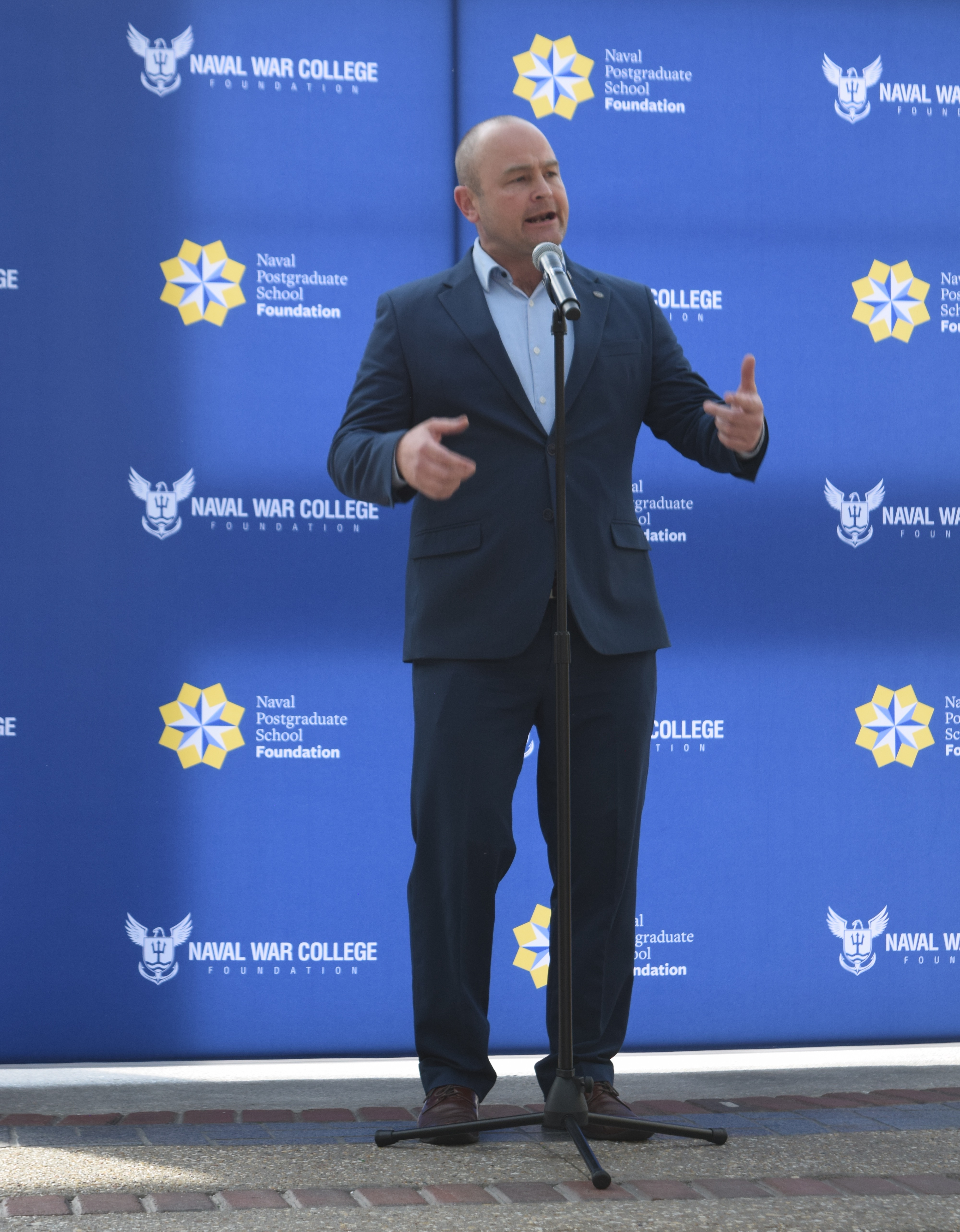
"Like others here, I benefited from educators who inspired relentless exploration and focused on delivering decisive advantage to our warfighters. Based on my meeting with students earlier today, I'm excited by the next generation of creative problem solvers." — DARPA Director Stephen Winchell, NPS Alumnus
His remarks focused on maintaining technological advantage as timelines compress and success depends on moving efficiently from problem definition to development to application. It set the tone for the rest of the week, carrying into the working sessions and conversations that followed, where NPS students and faculty engaged directly with industry partners and defense leaders around projects addressing operational challenges.
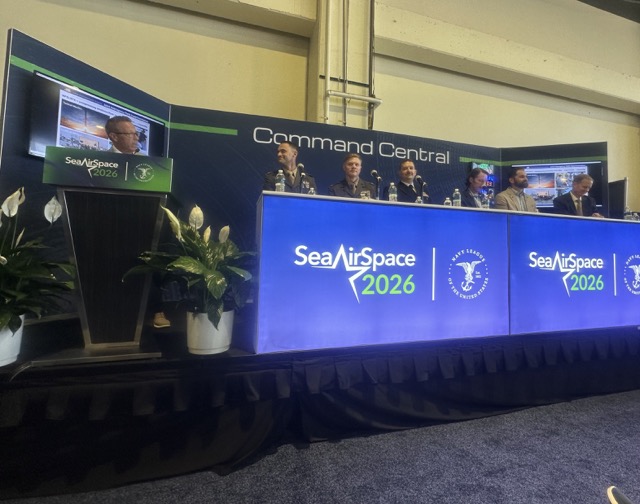
NPS’ centerpiece conversation at Sea-Air-Space was the panel discussion, Accelerating Ideas to Impact: Warfighters and Industry Winning the Innovation Race at NPS, moderated by retired Rear Adm. Joseph DiGuardo. Across operators, industry representatives, and technologists, the discussion kept returning to the same structural insight: capabilities move faster when those defining the problem are directly connected to those developing and testing solutions.
Jon Lazar, Operational Energy Prototyping Fund, Office of the Secretary of Defense, laid out the acquisition challenge clearly. The system is often caught between two failure modes. Move too slowly and you lose trust. Deliver something not good enough and you lose trust. Small businesses, in particular, lack clear entry points into DoD, making it difficult to engage at the pace the mission demands. The path forward requires clearer on-ramps, stronger partnerships, and earlier involvement from acquisition officials.
Retired Col. Mike Richardson, JIFX Director, described how Joint Interagency Field Experimentation at NPS addresses that directly. The JIFX program functions as a sandbox: it brings warfighters, students, faculty, and industry together in an operational environment, reduces the friction imposed by traditional acquisition timelines, and builds confidence through repeated interaction. …Refine it. Repeat.
Shelby Ochs of Anduril emphasized that industry moves fastest when it is close to the problem. Direct engagement with operators and immediate feedback change how quickly something can be built, tested, and improved.
Maj. Dillon Pierce, USMC, focused on getting capability into the field. His work developing and flight-testing a low-cost guided missile system using commercial components reflects that approach. Built around what he describes as capability-cost inversion, it demonstrates how essential capability can be delivered faster and at a fraction of the cost of traditional models. Solutions do not need to be perfect. Progress depends on putting something in front of operators early and moving it forward from there.
Maj. Christian Thiessen, USMC, framed what success looks like. His Detachable Drone Hijacker, a low-cost counter-UAS system developed and tested through NPS and JIFX and now licensed to industry, reflects the same standard. Success is not defined by whether something becomes a Program of Record, but by whether it works in practice. Usability, operational impact, and how quickly it can be improved are what matter.
Lt. Cmdr. Max Leutermann, USN, focused on how that progress happens. His work developing and fielding a counter-UAS system through JIFX and into a NATO exercise reflects that cycle. Fail fast, adjust, and repeat. Immediate feedback and continuous iteration are what drive speed. Getting the right people working on the problem makes that cycle effective.
DiGuardo drew it together: acceleration happens when the system works together. No single stakeholder can solve this alone. Trust is the prerequisite, and NPS is one of the few environments where that trust is built through sustained, repeated interaction across all of those groups.
During the Monday evening reception, the Foundation recognized Dell Technologies and RTX as Foundational Partners of the Naval Innovation Center at NPS, honoring their early and sustained contributions and a commitment to actively partner within the Naval Innovation Center at NPS as it becomes operational.
Sea-Air-Space 2026 reinforced what NPS already demonstrates: connecting operational need with development, testing solutions in relevant environments, and iterating quickly is the defining advantage. The Naval Innovation Center at NPS will extend this model bringing operators, researchers, and industry into a single environment where solutions can be built, tested, and advanced at the pace the mission demands.


