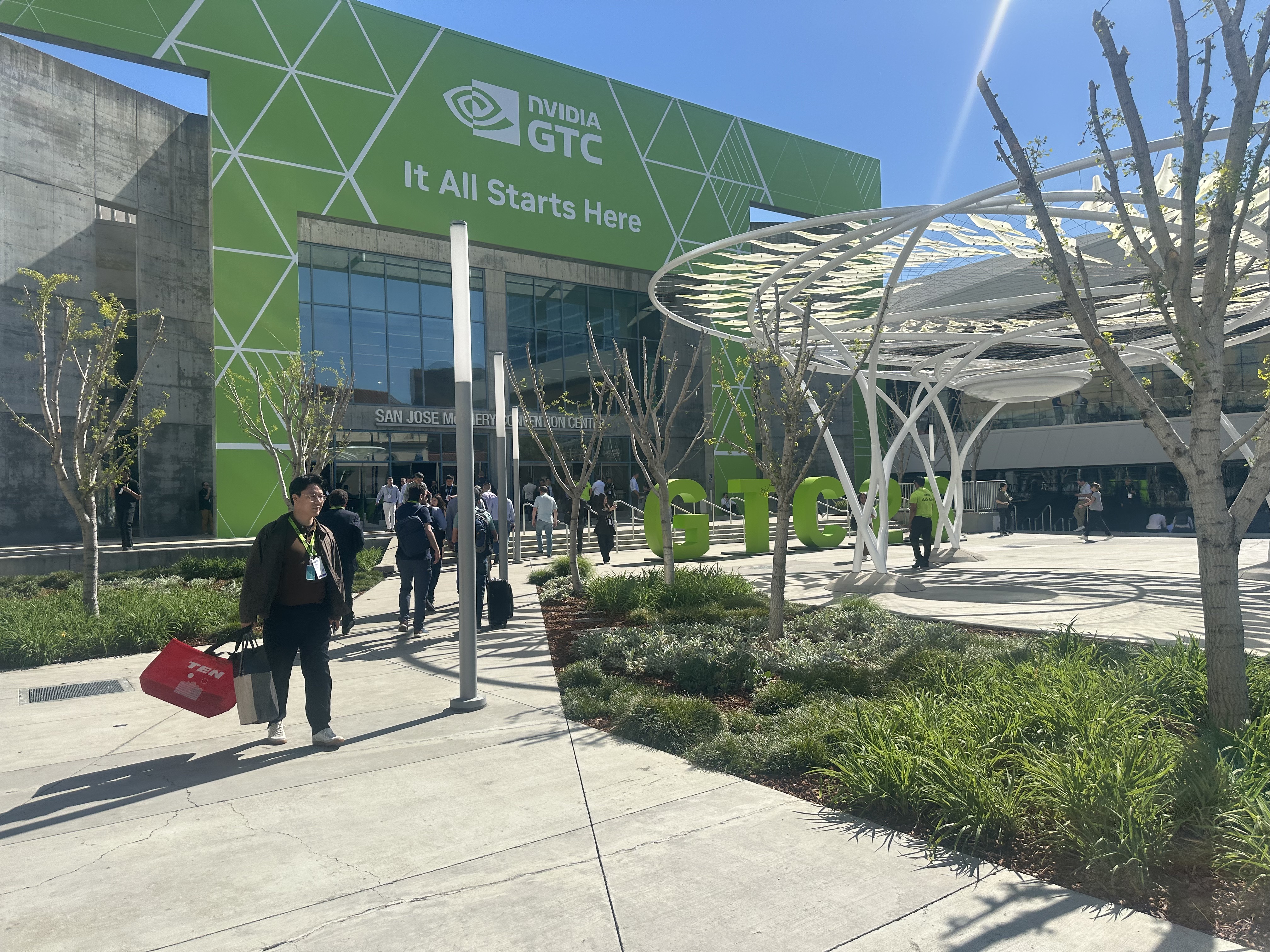
The NPS Foundation and NPS attended NVIDIA GTC 2026 last week, the leading global AI conference and one of the clearest indicators of where artificial intelligence and advanced computing are heading. It was clear that the Naval and Joint Forces need to be part of these conversations.
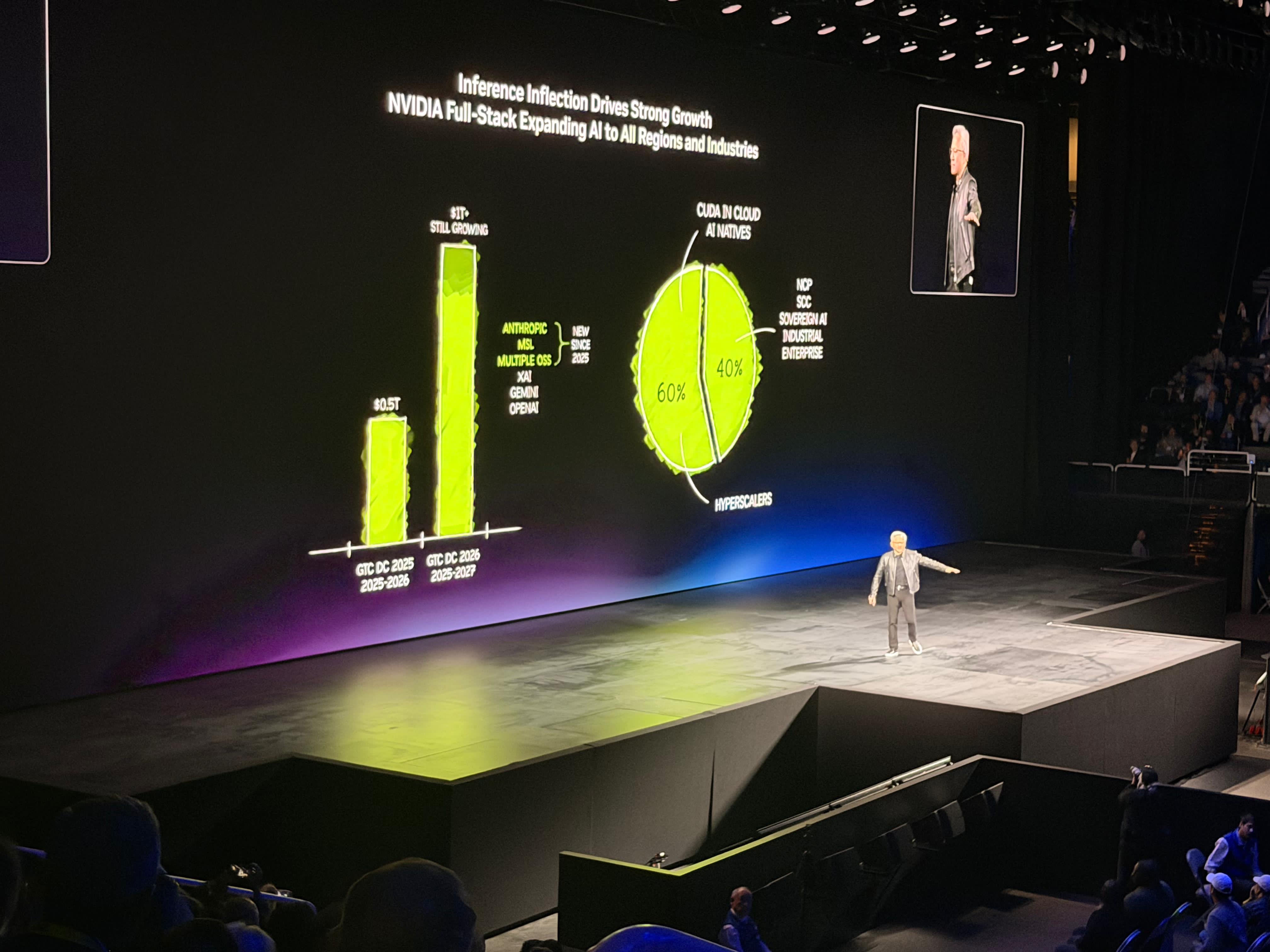
The Foundation sponsored 10 NPS students and faculty to attend GTC, with participation in sessions and trainings across cybersecurity, autonomy, large-scale models and emerging AI systems. This included direct engagement with the teams building and deploying these technologies.
A clear shift is happening toward agentic AI systems that can plan, act and operate with increasing autonomy, and barriers to building and deploying these systems are decreasing. The advantage is moving toward organizations that can apply them effectively while managing risk. For defense organizations, this means the focus must be on developing leaders and organizations with the experience and judgment to operate in complex environments, securely and effectively.
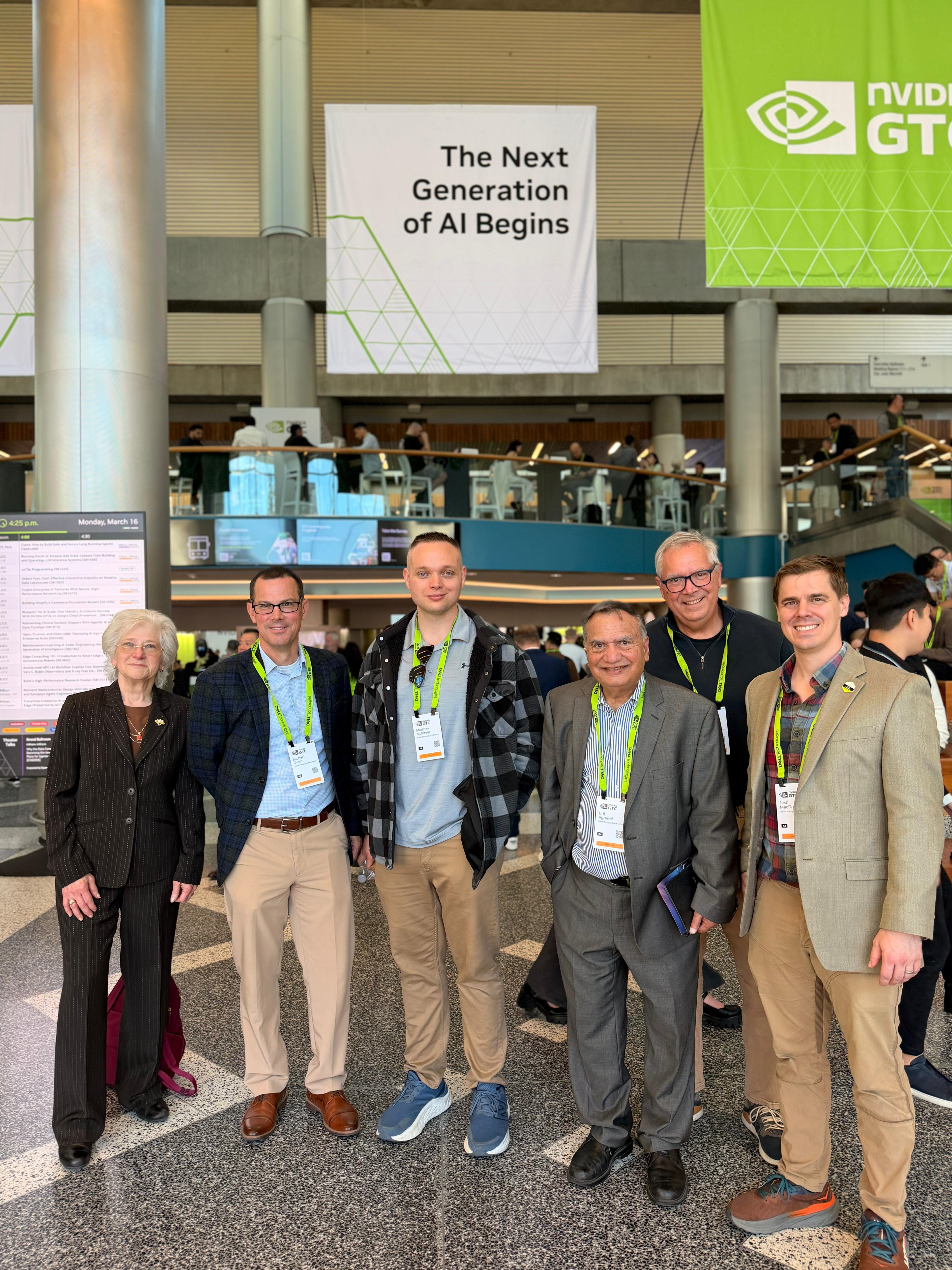
The students who attended brought exactly that kind of perspective. Lt. Cmdr. Matt McIntyre, an Operations Research student at NPS, captured what the week opened up for him:
We tend to discuss AI in a limited context, focusing heavily on the transactional interactions with Agentic AI and LLMs in our daily workflows and operations, but NVIDIA GTC solidified for me that the future of AI, its underlying mathematics, and the technological infrastructure to support it, extends far beyond that.
Highlights:
• NVIDIA hosted a dedicated cuOpt discussion for NPS, alongside Palantir, with students participating in training sessions later in the week, demonstrating how AI-driven optimization can support logistics and mission planning. For McIntyre, this connected directly to his work, "I see massive potential in using tools like NVIDIA cuOpt to solve complex optimization problems. Coupled with the insights provided by Agentic AI, we could greatly accelerate the pace of problem solving without sacrificing solution quality."
• The NPS Foundation co-hosted a reception with NVIDIA and MITRE focused on ASPEN and their collaboration deploying the model at NPS with students and researchers.
• The NPS Foundation secured two DGX Spark systems with NemoClaw pre-installed, enabling NPS researchers to begin working with agent-based AI systems in a secure environment.
As installation of the NVIDIA DGX GB300 at NPS continues, NPS is expanding its ability to model, simulate and apply these systems at scale, reinforcing their commitment to leading through early access and hands-on engagement with significant technologies.
What stood out across the week was the range of where AI is being applied and how fast it is changing those disciplines. McIntyre noted that one of his biggest surprises was "the ongoing efforts to merge Quantum Computing with AI, and how far they've advanced in just a few years." That cross-discipline scope is exactly what makes GTC valuable for NPS students, who are collaborating across every sector and in complex, interconnected domains.
For future students and service members who have the opportunity to attend GTC, McIntyre's advice is clear. "The value of participating in NVIDIA GTC cannot be overstated. It offers immense professional development through direct interaction with the industries dedicated to supporting our mission, alongside the personal growth that comes from opening your mind to a world of possibilities and new technologies."
Through these efforts, NPS and the NPS Foundation are working alongside industry partners to engage early, build applied understanding and develop leaders who can evaluate and apply these technologies where they are needed now.


